

October 27, 2026
Black Friday SMS campaigns: how to turn timely messages into more sales
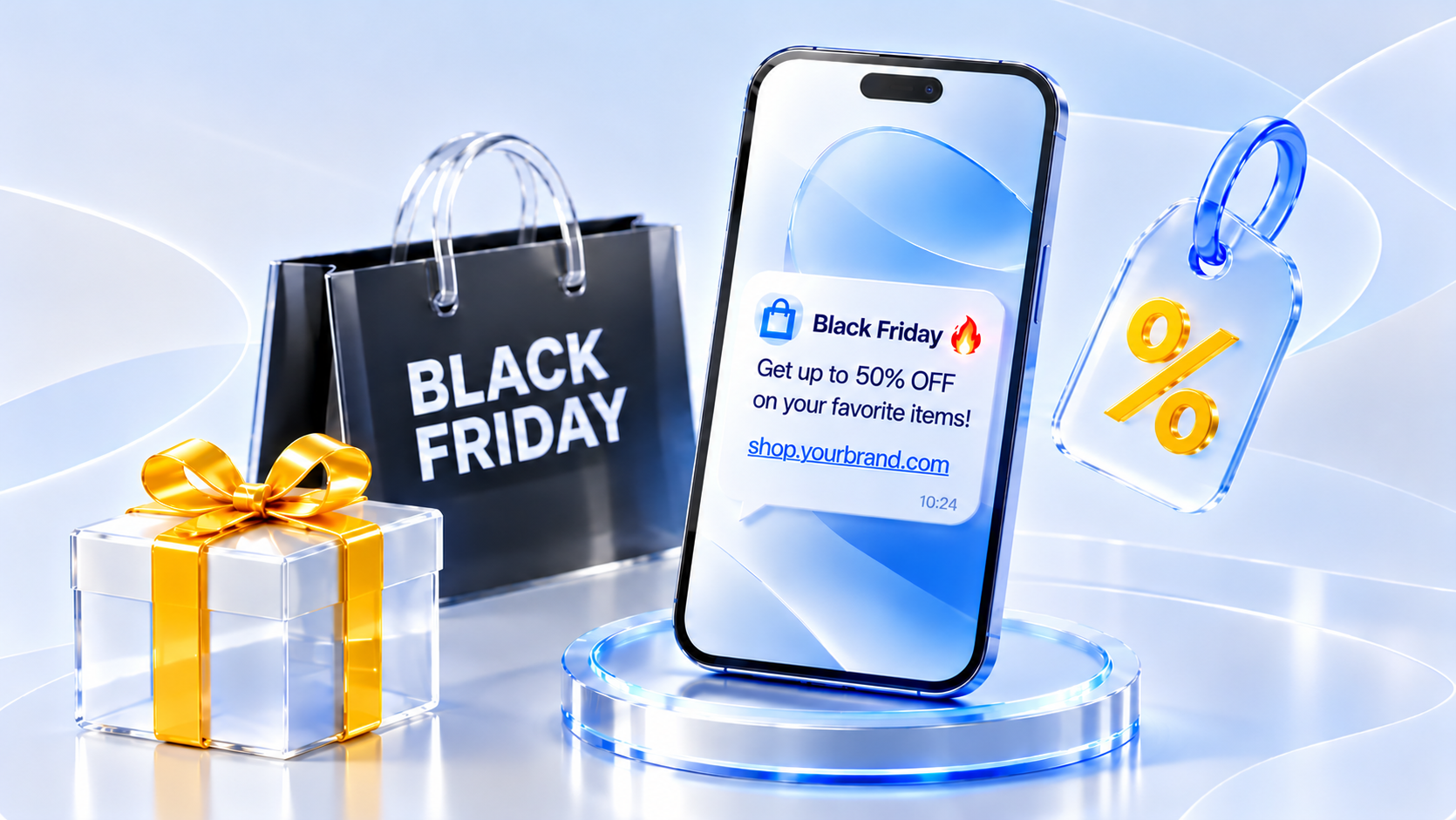
During Black Friday, shoppers are flooded with promotional emails, social media ads, push notifications, and competing offers. Even an attractive deal can go unnoticed if it arrives too late. SMS gives businesses a direct way to share time-sensitive offers, announce flash sales, recover abandoned carts, and bring customers back before a promotion ends.
But successful campaigns take more than a catchy message and a discount code. They depend on relevant offers, smart timing, and reliable delivery when demand is at its highest.
Black Friday SMS campaign essentials
A successful Black Friday SMS campaign starts with a permission-based audience, a relevant offer, and a clear call to action. Prepare your messages before the sale, use customer behavior to time follow-ups, and check sending capacity and delivery reports. Measure incremental sales and profitability rather than relying on message volume alone.
Why SMS deserves a place in your Black Friday marketing strategy
Your message reaches customers where they already are
SMS arrives in the recipient’s native messaging app. Customers don’t need to install another application or check a promotional inbox. This makes it particularly useful for announcements that lose value with time, such as a two-hour flash sale.
Of course, delivery doesn’t guarantee attention. The offer still needs to be relevant, and the timing needs to make sense.
SMS makes it easier to act immediately
A good SMS communicates the offer, deadline, and next step in seconds.
Example: “Your Black Friday early access is live! Save 25% on selected favorites until 6 PM. Shop now: [link]”
The link should take customers directly to the advertised offer, making it easy to move from message to purchase.
SMS works with other marketing channels
Email can introduce the full Black Friday collection, SMS can highlight a limited-time offer, and push notifications can engage active app users. Each channel has a role, so customers receive useful information rather than the same promotion repeated everywhere.
SMS supports personalized, behavior-based communication
Some shoppers are waiting for a particular product to go on sale. Others may respond to free shipping, exclusive access, or a reminder about something they considered buying.
With appropriate marketing permissions and customer data, businesses can tailor messages to different audiences.
Before launching, answer three questions: Who are we trying to reach? What action do we want them to take? Why should they act now?
Segment loyal customers, first-time shoppers, inactive buyers, and cart abandoners instead of treating the entire database as one audience.
7 Black Friday SMS campaign ideas worth trying
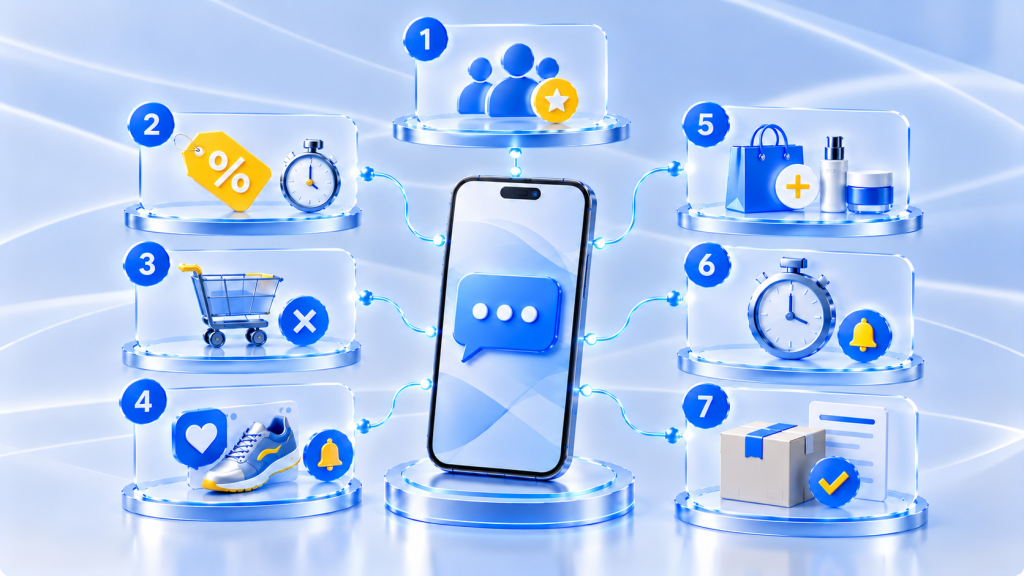
1. Give loyal customers a head start
Offer VIP shoppers early access to selected deals.
Example: “You’re on the VIP list! Your Black Friday early access starts now. Shop our best deals 24 hours before everyone else: [link]”
Reward loyalty with first access to limited-stock products or exclusive bundles rather than always increasing discounts.
2. Create a product-specific flash sale
Focus on a category relevant to each customer segment.
Example: “Your wishlist just got cheaper! Selected wireless headphones are 30% off until 4 PM. See the deals: [link]”
A targeted offer may be more appealing than a generic storewide promotion, especially when it reflects previous purchases or expressed interests. Keep deadlines genuine.
3. Recover abandoned carts while the offer is relevant
A well-timed reminder can bring interested shoppers back before a promotion ends.
Example: “Still thinking it over? Your Black Friday picks are waiting in your cart. Complete your order before the sale ends: [link]”
Send reminders only where permitted, allow enough time for customers to complete checkout, and stop the sequence once they purchase. Test a simple reminder before offering an additional discount.
4. Turn wishlists into personalized sale alerts
Let customers know when products they’ve shown interest in become part of a Black Friday promotion.
Example: “Good news! The sneakers on your wishlist are now 20% off for Black Friday. Take another look: [link]”
Check product availability and current pricing before sending. Personalized alerts lose their value if the advertised item is already out of stock.
5. Use bundles to increase order value
Black Friday doesn’t have to mean discounting individual products. Bundles can encourage customers to purchase complementary items together.
Example: “More value, one Black Friday deal. Get our skincare essentials bundle for 25% less than buying separately. Explore the set: [link]”
Choose products that make sense together and track profitability, not just average order value.
6. Send a useful last-chance reminder
As a genuine promotion deadline approaches, a final message can help interested customers make a decision.
Example: “Last call! Our Black Friday offers end tonight at midnight. Your favorite deals are still here: [link]”
Focus on customers who have shown interest but haven’t purchased. Avoid artificial urgency or repeatedly extending supposedly final deadlines.
7. Extend the campaign into Cyber Monday
Black Friday doesn’t have to be the end of your promotional calendar. Cyber Monday offers another opportunity to reach customers with a fresh, relevant offer.
Example: “Missed Black Friday? Cyber Monday deals are here! Save 20% on selected tech essentials until midnight. Shop now: [link]”
Rather than repeating Friday’s campaign, highlight different products, online-exclusive offers, or categories that performed well with specific customer segments.
When should you send Black Friday SMS messages?
Black Friday 2026 falls on November 27, followed by Cyber Monday on November 30. A simple campaign timeline can help organize communications without overwhelming subscribers.
- Two to three weeks before: Review marketing permissions, prepare customer segments, and introduce upcoming offers.
- One to two days before: Give eligible VIP customers early access.
- On Black Friday morning: Announce the main promotion at an appropriate local time.
- During the sale: Send relevant, behavior-triggered reminders.
- Before the deadline: Send a selective last-chance message.
- On Cyber Monday: Introduce a fresh offer to suitable customer segments.
This doesn’t mean every customer should receive every message. Frequency should depend on customer preferences, engagement, and applicable sending rules.
A smarter alternative to fixed schedules: behavioral triggers
A calendar provides structure, but customer behavior can tell you when a message is actually useful.
Someone who abandons a cart may benefit from a reminder. A shopper whose wishlist item goes on sale may appreciate a personalized alert. Someone who has already completed a purchase shouldn’t keep receiving reminders about the same order.
Use customer actions to guide follow-ups, with appropriate permissions and suppression rules in place.
How to write Black Friday SMS messages that convert
The most effective messages are usually straightforward. Customers should understand the offer and what to do next without having to read a long explanation.
Use a simple formula:
Brand + Relevant offer + Reason to act + Clear next step
Example: “STYLECO: Black Friday starts now! Save 30% on winter essentials until midnight. Shop the collection: [link]”
Keep the message focused on one main offer. Use genuine deadlines, identify your brand, and link directly to the relevant landing page.
A recognizable link also helps customers understand where they’re being directed. Include any opt-out instructions required for the destination.
Keep SMS encoding and message length in mind
Message length affects both readability and cost.
A single GSM-7 SMS segment supports up to 160 characters, while a UCS-2 encoded segment supports up to 70. For concatenated messages, the limits typically decrease to 153 and 67 characters per segment, respectively.
Certain symbols, including emoji, can change the encoding and increase the number of billable segments. Before launching a large campaign, check message length, encoding, and expected costs with your SMS provider.
The overlooked part of Black Friday SMS: technical readiness
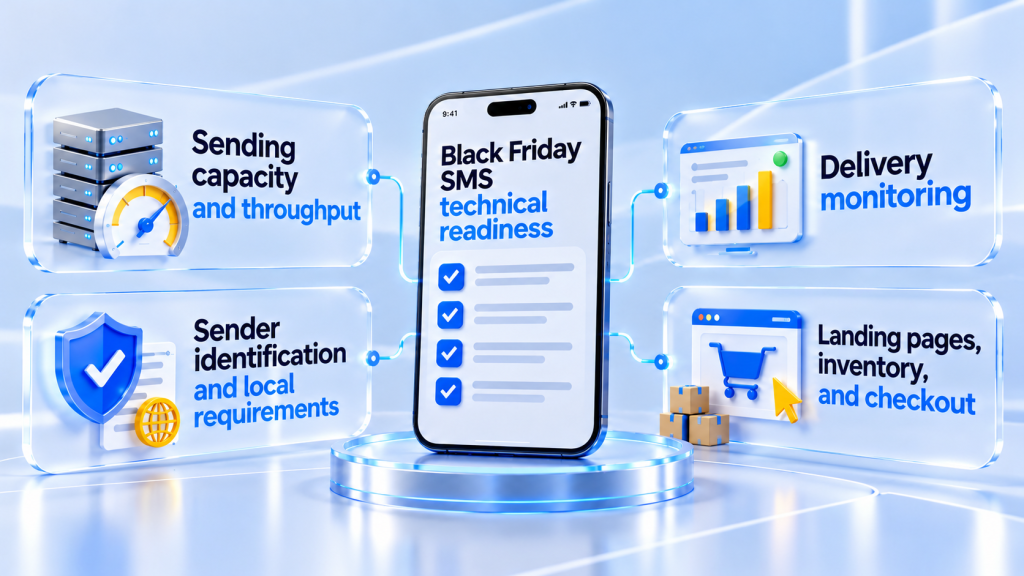
A strong offer won’t deliver results if messages arrive after the promotion ends or customers can’t complete their purchases. Technical preparation matters just as much as campaign content.
Sending capacity and throughput
Confirm that your provider can handle the expected volume within the required time window.
Review throughput limits, potential queueing, and destination-specific restrictions in advance. Scheduling a campaign for 10 AM doesn’t mean every recipient will receive it at exactly that time.
Delivery monitoring
Message submission and successful delivery are different things.
Monitor available delivery reports, investigate failures, and watch for unusual changes in delivery performance. Remember that a delivery confirmation doesn’t necessarily mean the message was read.
Sender identification and local requirements
Sender ID rules, registration requirements, and permitted sending times vary by country and operator.
Check the requirements for each destination before launch, including any registration lead times or content restrictions that could delay your campaign.
Landing pages, inventory, and checkout
Test the complete customer journey, from clicking the SMS link to completing a purchase.
Make sure mobile pages load quickly, discounts apply correctly, and checkout can handle traffic spikes. Keep inventory and promotional information up to date so customers don’t arrive at expired offers or unavailable products.
How to combine SMS with other communication channels
SMS works best when it’s part of a coordinated customer communication strategy.
For example, an online retailer could use email to introduce the full Black Friday collection, SMS to announce a time-sensitive deal, and push notifications to engage active app users.
After a purchase, transactional messages can confirm orders and provide delivery updates. These service communications should remain separate from promotional campaigns.
The important part is coordination. A customer who has already purchased shouldn’t receive another reminder to complete the same order.
Measure sales impact, not just message volume
A large campaign isn’t necessarily a successful one. What matters is whether your messages lead to meaningful business results.
Useful metrics include delivery rate, click-through rate, conversion rate, revenue per delivered SMS, cost per conversion, unsubscribe rate, and incremental revenue.
Define metrics consistently when comparing campaigns. For example, click-through rate may be calculated using unique clickers divided by delivered messages.
Don’t confuse attributed revenue with incremental revenue
If a campaign generates $20,000 in attributed sales, that doesn’t mean all $20,000 resulted from the SMS messages. Some customers might have purchased anyway.
To estimate the additional impact, randomly divide an eligible audience into test and control groups. Send the campaign to the test group while keeping other marketing activity comparable.
Comparing purchase rates, revenue per eligible customer, and contribution margin provides a better understanding of the campaign’s incremental effect.
Why discount economics matter
Suppose 50,000 messages generate 500 attributed purchases at an average order value of $80. That’s $40,000 in attributed revenue, not profit.
Messaging costs, product margins, discounts, and fulfillment expenses all affect the final result.
A campaign that produces fewer sales at healthier margins may be more valuable than one that generates high revenue through aggressive discounting.
Common Black Friday SMS mistakes
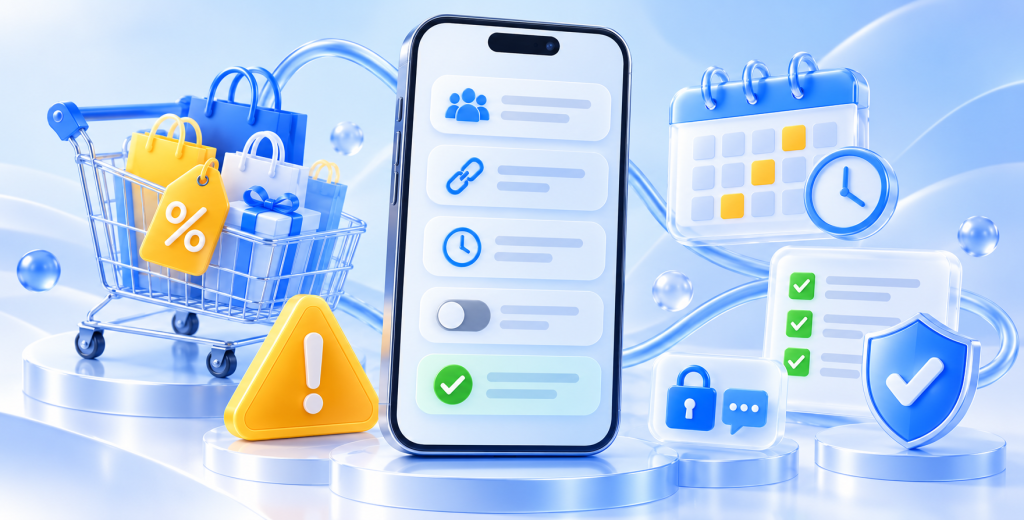
Even a well-planned promotion can underperform because of avoidable mistakes.
Common problems include sending identical offers to every subscriber, preparing the contact database too late, using artificial urgency, ignoring time zones, and continuing reminders after customers have purchased.
Technical oversights matter too. Untested links, slow landing pages, insufficient sending capacity, or poor delivery monitoring can undermine an otherwise strong campaign.
Focus on relevant communication, a smooth customer experience, and profitable outcomes rather than sending as many messages as possible.
Black Friday SMS compliance: protect trust while driving sales
Promotional SMS campaigns must follow the rules that apply to their target markets.
Maintain appropriate marketing permissions, keep reliable consent records where required, identify the sender clearly, and provide effective ways to opt out. Process unsubscribe requests promptly.
In the US, requirements may include the TCPA and applicable carrier rules. In Europe, GDPR and national electronic marketing laws may apply, while the UK also has PECR requirements.
Rules vary by destination and message type, so check local requirements before sending. In particular, don’t assume that a phone number collected for delivery updates can automatically be used for marketing.
How ImLink can support your Black Friday SMS strategy
Black Friday creates a demanding environment for business messaging. Large volumes, limited-time offers, and different market requirements make reliable communication especially important.
ImLink provides messaging solutions for business communications, helping companies connect with their customers.
When preparing your campaign, consider expected traffic, target destinations, sender requirements, integration needs, and delivery monitoring.
Explore ImLink and contact the team to discuss your Black Friday messaging requirements and available solutions.
Final thoughts: make every Black Friday message count
Black Friday SMS marketing isn’t about sending the most messages or offering the biggest discounts. It’s about reaching the right customers with offers that matter at the right moment.
Thoughtful segmentation, timely messages, coordinated channels, and reliable delivery can make SMS a valuable part of your Black Friday strategy.
The goal is simple: make each message useful for the customer and worthwhile for the business.
And remember: a successful promotional campaign doesn’t just increase sales – it inevitably drives more OTP traffic as customers log in, register, complete purchases, and confirm payments. Make sure your authentication infrastructure is ready for the spike, with enough capacity and reliable fallback channels to keep every interaction moving.