

November 12, 2026
WhatsApp Business API pricing changes from October 1, 2026: what businesses need to know
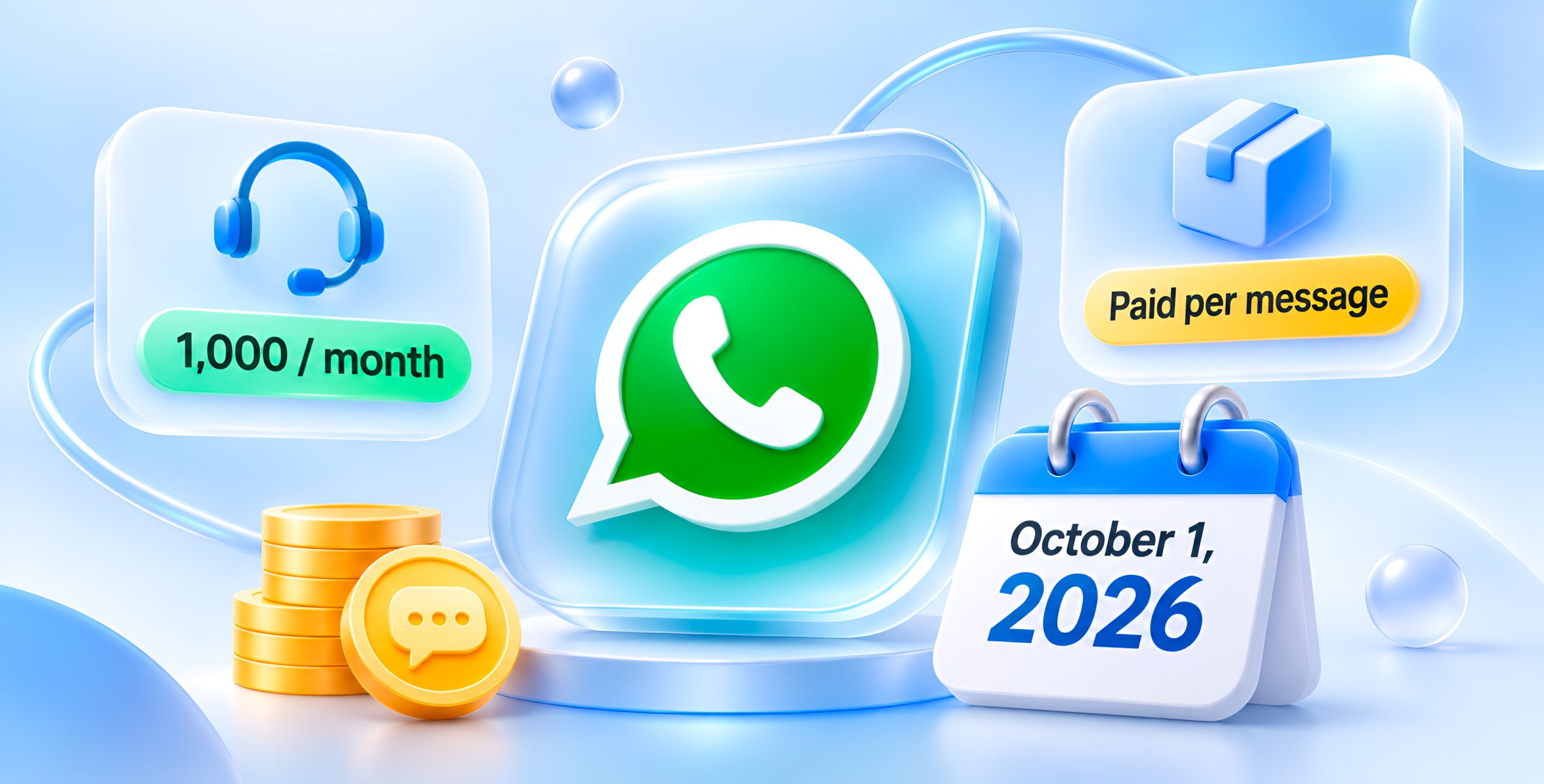
Since October 1, 2026, Meta has introduced new charges for WhatsApp Business API messages that were previously free. The changes mainly affect customer support, chatbots, and automated notifications.
Here’s what has changed and what businesses should do about it.
In this article
- Service messages: how the new 1,000-message limit works
- Utility messages: what businesses now pay for
- International pricing: rates, discounts, and additional fees
- How to optimise WhatsApp messaging costs
- Key takeaways for businesses
Service messages: 1,000 free, then pay per message
Previously, businesses could reply to customers for free (no charges from Meta) within the 24-hour customer service window.
Now, each WhatsApp business phone number receives 1,000 free Service messages per month. From the 1,001st delivered message, Meta charges per message.
This applies to replies sent by human agents and third-party chatbots.
For example, if from one business number 6,000 Service messages are delivered per month, 5,000 become billable, assuming no other exemptions apply.
The 24-hour rule remains unchanged. Businesses can send free-form replies within 24 hours of a customer’s last message. After that, an approved template is required.
Utility messages: no longer free within 24 hours
Utility templates include order confirmations, delivery updates, payment notifications, and appointment reminders.
Previously, these templates were free when sent within an active customer service window.
Since October 1, 2026, every delivered Utility template is chargeable, even if the customer has just contacted the business.
The 1,000-message free Service allowance does not apply to Utility templates.
What about international pricing?
WhatsApp Business API rates vary by the recipient’s country and message category.
Service messages are charged at the applicable market rate, without volume discounts. Utility and Authentication templates can still qualify for volume-based pricing.
Businesses should also account for any additional fees charged by their Business Solution Provider (BSP).
Some free messaging options remain available. For example, eligible conversations initiated through Click-to-WhatsApp ads can benefit from a free messaging window of up to seven days, subject to Meta’s conditions and rollout.
How can businesses control WhatsApp costs?
The new pricing model makes it important to review communication workflows:
- Recalculate messaging costs. Analyse Service and Utility volumes by country and business phone number.
- Optimise chatbot conversations. Remove unnecessary steps and repetitive replies without compromising customer experience.
- Review automated notifications. Prioritise messages that genuinely help customers take action.
- Check billing settings. Ensure payment arrangements with Meta or your BSP are configured correctly.
- Consider alternative channels. SMS, RCS, and other messaging channels can complement WhatsApp when they improve delivery or cost efficiency.
The bottom line
WhatsApp remains a valuable channel for customer communication, but businesses can no longer assume that support conversations are free.
The real measure of messaging efficiency is not the cost per message, but the cost of achieving the desired result: resolving a customer request, confirming a transaction, or completing a purchase.